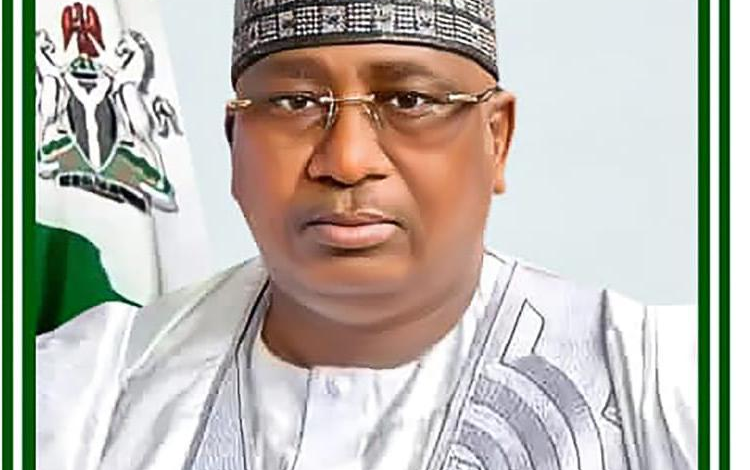
President Bola Tinubu signed the tax reform bills into law in Abuja on Thursday.
Team@orientactualmahs.com learned that Senate President, Barrister Godswill Akpabio, Speaker Tajudeen Abass, Chairman of the Nigeria Governors’ Forum, Mallam Abdulrahman Abdulrazaq, Chairman of the Progressives Governors’ Forum, Mr Hope Uzodinma, Minister of Finance and Coordinating Minister of Economy, Mr Wale Edun; and the Attorney General of the Federation, Mr Lateef Fagbemi, were among political figures that attended the signing ceremony held at the Presidential Villa, Abuja.
Recall that the House of Representatives had passed the tax reform bills into law on March 18, 2025, while the senate had followed suit on May 8, 2025.
The president signed the bills into law at about 03:20pm on Thursday.
The four bills include: the Nigeria Tax Bill, the Nigeria Tax Administration Bill, the Nigeria Revenue Service (Establishment) Bill, and the Joint Revenue Board (Establishment) Bill.
‘When the new tax laws become operative, they are expected to significantly transform tax administration in the country, leading to increased revenue generation, improved business environment, and a boost in domestic and foreign investments’ the president’s media aide, Mr Bayo Onanuga said.
One of the four bills is the Nigeria Tax Bill (Ease of Doing Business), which aims to consolidate Nigeria’s fragmented tax laws into a harmonised statute.
‘By reducing the multiplicity of taxes and eliminating duplication, the bill will enhance the ease of doing business, reduce taxpayer compliance burdens, and create a more predictable fiscal environment’ the presidency had submitted in a statement on Wednesday night.
The second bill, the Nigeria Tax Administration Bill, will establish a uniform legal and operational framework for tax administration across federal, state, and local governments.
The Nigeria Revenue Service (Establishment) Bill, the third bill, repeals the current Federal Inland Revenue Service Act and creates a more autonomous and performance-driven national revenue agency— the Nigeria Revenue Service.
It defines the NRS’s expanded mandate, including non-tax revenue collection, and lays out transparency, accountability, and efficiency mechanisms.
The fourth bill is the Joint Revenue Board (Establishment) Bill.
It provides for a formal governance structure to facilitate cooperation between revenue authorities at all levels of government. It introduces essential oversight mechanisms, including establishing a Tax Appeal Tribunal and an Office of the Tax Ombudsman-Team@orientactualmags.com Do you have any information you wish to share with us? Do you want us to cover your event or programme? Kindly send SMS to 08059100286, 09094171980 or get in touch via orientactualmag@gmail.com. Thank you