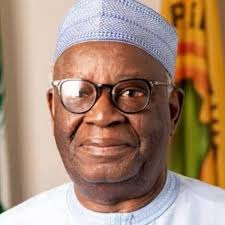
Gov Idris And Nigeria’s Livestock Renaissance: Why President Tinubu Entrusted Kauran Gwandu With A National Economic Imperative-Yahaya Sarki

A Deliberate Choice Foe A National Mission:
In leadership, there are moments when a single appointment speaks louder than a thousand policy statements. Such moments reveal intent, direction, and vision. President Bola Ahmed Tinubu’s appointment of the governor of Kebbi State, Dr. Nasir Idris, Kauran Gwandu, as Chairman of the National Economic Council (NEC) Committee on Livestock Development is a defining moment in Nigeria’s contemporary economic journey.
This appointment is neither accidental nor ceremonial. It is a deliberate, strategic, and well-considered decision aimed at repositioning Nigeria’s livestock sector as a modern, sustainable, and competitive industry, aligned with the broader national economic priorities of diversification, job creation, food security, and foreign investment attraction.
As Nigeria searches for new engines of growth beyond oil, livestock development has emerged as a critical frontier.
President Tinubu’s choice of leadership for this sector sends a powerful message of seriousness and resolve.
Governor Nasir Idris’ emergence as Chairman of this vital committee reflects a convergence of experience, credibility, proven performance, and deep-rooted understanding of the livestock economy. It is a recognition of leadership built on results, not rhetoric; on impact, not intention.
LEADERSHIP PROVEN BY ACTION NOT POSITION :
Governor Nasir Idris is not new to national service, nor is he a stranger to complex reform-oriented responsibilities. Over the years, he has consistently demonstrated a leadership style anchored on discipline, accountability, inclusiveness, and tangible outcomes.
At both state and national levels, his public service record reflects an unwavering commitment to positive change and societal impact.
President Tinubu’s confidence in Governor Idris is rooted in the track record. As Chairman of the NEC Committee on Livestock Development, the governor is expected to coordinate, harmonize, and drive reforms cutting across states, institutions, private investors, and international partners. This task demands administrative competence, but also political tact, sectoral knowledge, and strategic foresight – qualities Governor Idris has consistently demonstrated throughout his career.
The livestock sector is complex. It intersects with agriculture, trade, security, climate change, rural development, and culture. Reforming it requires leadership that understands both its economic value of livestock and the social realities surrounding pastoralism in Nigeria. In Governor Nasir Idris, President Tinubu found a leader who embodies this balance.
KEBBI STATE: A NATURAL LIVESTOCK POWERHOUSE:
Another compelling factor behind the President’s choice is the strategic position of Kebbi State within Nigeria’s livestock ecosystem. Kebbi is not merely a participant in the livestock economy; it is one of its strongest pillars.
The state’s economy is predominantly agrarian, with a large proportion of its population engaged in farming and animal husbandry. Among them are the Fulani pastoral communities, who constitute a substantial segment of the population and have sustained livestock based livelihoods for generations constitute a significant segment of the population.
Pastoralists are found across virtually all local governments in Kebbi State, with strong presence in Birnin Kebbi, Gwandu, Bunza, Suru, Bagudo, Argungu, Kalgo, Sakaba, among others. This widespread presence has made livestock rearing a central to Kebbi’s socio-economic identity.
Animal husbandry in Kebbi State supports the production of beef, milk, butter, cheese, hides, and skins, contributing significantly to Nigeria’s food supply chain and leather industry. These products move from rural grazing fields to urban markets nationwide, strengthening livelihoods and inter-state commerce.
A MULTI – BILLION NAIRA LIVESTOCK ECONOMY
Kebbi State generates millions of naira annually through cattle and livestock trade. Traders from across Nigeria—and beyond—regularly visit the state to purchase animals in large quantities for resale, underscoring its status as a major livestock hub.
Indeed, Kebbi State is widely regarded as Nigeria’s second-largest livestock producing state, Kebbi is estimated to have a livestock population running in to several millions.
Data from the 2024 Agricultural Performance Survey conducted by the Federal Ministry of Agriculture and Food Security, put Kebbi State’s cattle population alone at approximately 1,430,131—a figure that has continued to rise.
Various government and media sources consistently rank Kebbi as either the largest or among the top livestock producing states in Nigeria, with total estimates of cattle, goats, and sheep often placed around 10 million animals. This vast livestock resource base positions Kebbi as a natural leader in any national livestock reform agenda.
FROM TRADITIONAL PRACTICE TO MODERN INDUSTRY
While Kebbi State’s livestock potential has long been evident, Governor Nasir Idris has taken decisive steps to transform traditional animal husbandry into a modern, structured, and economically competitive sector.
One of the governor’s landmark achievements is the establishment of a full-fledged Ministry dedicated solely to Livestock Development-a bold policy decision that reflects deep institutional commitment to the sector.
This reform has provided strategic focus, coordination, and direction to livestock across the state.
Further strengthening this commitment is the ongoing construction of the ultra-modern Veterinary Hospital in Birnin Kebbi, widely described as the largest in Africa. The facility represents a major leap in veterinary care, disease control, research, and livestock health management, benefiting not only Kebbi State but Nigeria as a whole.
Complementing this flagship project is the construction of zonal veterinary clinics across the state, ensuring that livestock owners in rural and semi-urban areas have access to professional veterinary services. These facilities are critical to reducing animal mortality, improving productivity, and safeguarding public health.
GLOBAL PARTNERSHIP AND INTERNATIONAL CONFIDENCE
Governor Idris’ livestock reform agenda has attracted growing international interest and confidence. In 2025, both the Indonesian and Brazilian governments formally expressed strong interest in partnering with Kebbi State on agricultural expansion and modern livestock production.
These expressions of interest translated into concrete diplomatic and economic engagements, including Governor Nasir Idris’ official visit to Indonesia, where discussions focused on agricultural technology, livestock breeding, processing, and value-chain development.
Similarly, the visit of the Brazilian Ambassador to Kebbi State signaled growing international recognition of the state’s livestock potential.
Brazil, as one of the world’s largest beef exporters, brings valuable expertise in large-scale livestock production, processing, and export logistics. Indonesia’s experience in integrated agricultural systems further enriches the scope of potential collaboration. These partnerships position Kebbi State-and Nigeria-on the path toward global competitiveness in livestock production.
PUBLIC HEALTH, FOOD SAFETY, AND DISEASE CONTROL
Another significant milestone under Governor Idris’ leadership is the routine vaccination of livestock against local and tropical diseases. This proactive approach protects not only animals but also consumers, ensuring that meat and dairy products entering the market meet safety standards.
Disease outbreaks in livestock can devastate rural economies, disrupt food supply chains, and pose serious public health risks. By institutionalizing vaccination and disease surveillance, the Kebbi State Government has taken a preventive, rather than reactive, stance—one that aligns with international best practices.
NATIONAL LEADERSHIP : THE NEC COMMITTEE ON LIVESTOCK DEVELOPMENT :
The maiden meeting of the National Economic Council Committee on Livestock Development, chaired by Governor Nasir Idris, marked the formal commencement of a new chapter in Nigeria’s livestock reform journey. The meeting, held on Tuesday, January 20, 2026, at the Kebbi State Liaison Office in Abuja, underscored the urgency and importance President Tinubu attaches to this sector.
Speaking at the meeting, Governor Idris outlined the committee’s terms of reference, which include reviewing proposals from the Federal Ministry of Livestock Development on the conversion of grazing reserves into communal ranches. This initiative is central to resolving long-standing challenges associated with open grazing, resource competition, and insecurity.
The committee is also tasked with examining the report and recommendations of the Presidential Livestock Reform Implementation Committee (PLRIC), with a view to ensuring effective, coordinated, and sustainable livestock development nationwide.
Toward Communal Ranching and Policy Reform.
Governor Idris also explained that the committee would identify interested states willing to implement communal ranching models, review existing livestock policies, and recommend reforms necessary to strengthen the sector.
He further disclosed that the committee would explore Public-Private Partnership (PPP) opportunities across livestock value chains, including meat processing, dairy production, leather exports, and cold-chain logistics. These partnerships are expected to unlock private capital, create jobs, and significantly increase the livestock sector’s contribution to Nigeria’s Gross Domestic Product (GDP).
A NATIONAL ASSIGNMENT ROOTED IN LOCAL EXPERIENCE
Governor Nasir Idris’ chairmanship of the NEC Committee on Livestock Development is, ultimately, a national assignment deeply rooted in local experience. Kebbi State’s livestock journey-its challenges, opportunities, reforms, and successes—offers valuable lessons for the entire country.
President Tinubu’s decision reflects a clear understanding that effective national leadership often emerges from proven sub-national performance. By entrusting this critical sector to Kauran Gwandu, the President has signaled a commitment to pragmatic solutions, inclusive growth, and results-driven governance.
A TURNING POINT FOR NIGERIA’S LIVESTOCK ECONOMY
Nigeria stands at the threshold of a livestock revolution. With the right policies, leadership, and partnerships, the sector can become a major driver of economic diversification, rural prosperity, food security, and export earnings.
Governor Nasir Idris’ appointment as Chairman of the NEC Committee on Livestock Development represents more than personal recognition; it symbolizes a turning point. It is a statement of intent that Nigeria is ready to move from potential to performance, from tradition to innovation, and from subsistence to sustainability.
Under his leadership, Nigeria’s livestock sector is poised not just to grow—but to lead-Mr Yahaya Sarki, who is Governor Nasir Idris’ Special Adviser on Media, writes from Birnin Kebbi, Kebbi State