A Tribute To Major General Abdullahi Mohammed: A Life of Dedicated Service to Nigeria-Jani Ibrahim
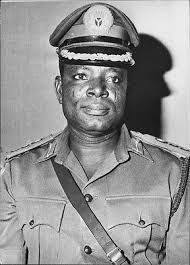
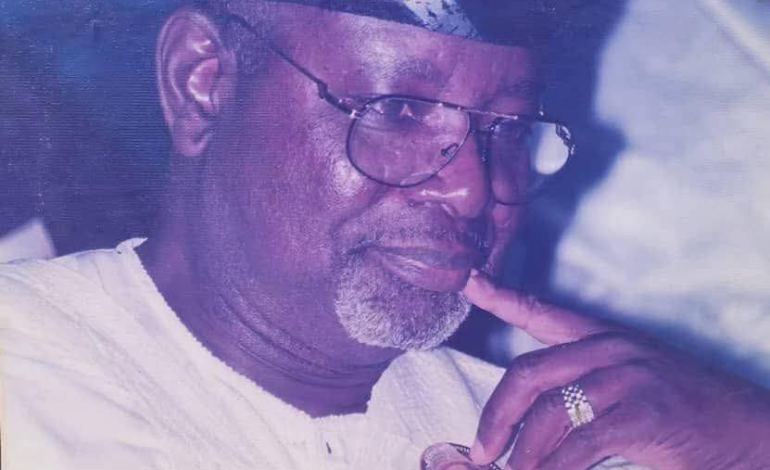
Today, Wednesday, November 5, 2025, Nigeria mourns the passing of one of its most distinguished military officers and public servants, retired Major General Abdullahi Mohammed Adangba, who died on Wednesday, November 5, 2024. As the nation bids farewell to this remarkable leader, we reflect on a life that exemplified service, dedication, and unwavering commitment to the Nigerian project.
He was a distinguished soldier, statesman, and a patriot.
.
Born in 1939 in Ilorin, Northern Region (now Kwara State), Major General Abdullahi Mohammed’s journey of service began when he joined the Nigerian Army in 1958, embarking on a military career that would span over two decades and leave an indelible mark on Nigeria’s history. His military education at the prestigious Royal Military Academy Sandhurst shaped him into the disciplined and strategic leader he would become.
Mohammed’s military acumen was first prominently displayed during his role as Director of Military Intelligence .
Perhaps one of Major General Mohammed’s most enduring legacies lies in his foundational work in establishing Nigeria’s modern security architecture. In March 1976, when General Olusegun Obasanjo recalled him from his position as Governor of Benue-Plateau State, Mohammed was appointed as the Pioneer Director General of the National Security Organisation (NSO) – a position he held from 1976 to 1979.
As the pioneer head of what would later evolve into Nigeria’s intelligence services, Mohammed laid the groundwork for the country’s internal security framework. His tenure coincided with Nigeria’s transition to civilian rule in 1979, during which he helped ensure the stability necessary for democratic transition. This role positioned him as one of the architects of Nigeria’s security infrastructure.
The Civilian Democratic Era: A Bridge Between Military and Civilian Rule
After retiring from active military service in 1979, Mohammed demonstrated his entrepreneurial spirit by venturing into private business as Managing Director of Atoto Press in Ilorin. However, his expertise in security and governance would soon be called upon again during Nigeria’s challenging transition periods.
In 1998, during another critical juncture in Nigerian history following the death of General Sani Abacha, General Abdulsalami Abubakar appointed Mohammed as National Security Adviser. In this capacity, he helped navigate the delicate transition from military to civilian rule, working to ensure the success of the 1999 elections that would usher in the Fourth Republic.
The Presidential Villa Years: Chief of Staff Extraordinaire
Major General Mohammed’s most visible and perhaps most impactful role came with his appointment as the first Chief of Staff to the President when Olusegun Obasanjo assumed office as civilian president in 1999. In this groundbreaking position – the first of its kind in Nigeria’s presidential system – Mohammed served as the chief executor and administrative coordinator of presidential policies.
His tenure as Chief of Staff, spanning nearly a decade (1999-2008), covered the entire eight-year President Obasanjo administration and the first year of President Umaru Musa Yar’Adua’s presidency.
A Man of Multiple Transitions
What distinguished Major General Mohammed throughout his career was his unique ability to successfully navigate and contribute to Nigeria’s various political transitions. From military rule under Murtala Mohammed and Obasanjo in the 1970s, through the Second Republic’s collapse, the military interventions of the 1980s and 1990s, to the establishment of the Fourth Republic, Mohammed remained a constant figure of stability and institutional memory.
His career trajectory – from military intelligence officer to state governor, from security chief to presidential aide – reflects not just personal ambition, but a deep understanding of Nigeria’s evolving political landscape and the adaptability required to serve the nation across different eras.
Those who worked with Major General Mohammed consistently spoke of his professionalism, discretion, and loyalty. His ability to serve effectively under different leaders – from military heads of state to civilian presidents – testified to his character and commitment to the office rather than personalities.
Major General Abdullahi Mohammed witnessed and shaped eight decades of Nigerian history. From the colonial period through independence, civil war, multiple military regimes, and the establishment of democratic governance, he remained committed to Nigeria’s progress and stability.
His death marks the end of an era – the passing of a generation that helped build modern Nigeria’s institutions and guided the country through its most challenging transitions. Yet his legacy lives on in the institutions he helped establish and the precedents he set for public service.
As Nigeria bids farewell to Major General Abdullahi Mohammed, we remember not just his titles and appointments, but his unwavering dedication to the Nigerian ideal. He served when called, led when required, and stepped aside gracefully when his time was done. His life embodied the principle that true leadership is about service to a cause greater than oneself.
In the words of the announcement of his passing: ‘May Allah (SWT) forgive him and grant him Jannatul Firdausi. Ameen’. Nigeria has lost a distinguished son, but his legacy of service, integrity, and commitment to national unity will continue to inspire future generations of leaders.
His was a life of service well-rendered, a duty faithfully discharged, and a legacy that will endure in the annals of Nigerian history.
‘Surely we belong to Allah and to Him we shall return’- Alhaji Jani Ibrahim, who is the President of NACCIMA, and Chairman of OPSN, writes from Abuja