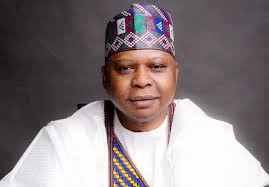
Pa Aderibigbe-Generational Bridge Builder-Jani Ibrahim

In the annals of Nigerian public service, a few names resonate with the distinction and pioneering spirit of Sir Chief Joseph Adeniyi Aderibigbe, the first Secretary to the Kwara State Government and the first Head of Service who laid the administrative foundations for what would become one of Nigeria’s most strategically important states.
His passing on October 22, 2025, at the remarkable age of 104 years marked not merely the end of a life, but the closing of a chapter that began when Kwara State first emerged on Nigeria’s political map on May 27, 1967.
The Foundation Builder
When the military administration headed by retired General Yakubu Gowon carved out Kwara State from the former Northern Region in 1967, the challenge of establishing a functioning civil service fell upon the shoulders of Joseph Adeniyi Aderibigbe, a distinguished administrator whose previous service as Provincial Secretary of Sokoto Province had already marked him as a man of exceptional capability.
Appointed as the first substantive Secretary to the Military Government (SMG) and Head of Service, Aderibigbe brought to bear the wisdom gained from his tenure during the First Republic, where he had served alongside some of Nigeria’s most formidable political figures.
The transition from regional to state-based administration required not just administrative acumen but visionary leadership. Aderibigbe’s role was pivotal in transforming what was essentially a military administration into a structured civil service that could serve the needs of a diverse population .
His tenure from 1967 to 1975 established the administrative template that subsequent administrations would build upon, creating institutions that have endured for over five decades.
A Bridge Between Worlds
Born in Erin-Ile, Aderibigbe embodied the cultural bridge that Kwara State itself represents. His Yoruba Christian background in a predominantly Muslim northern territory positioned him uniquely to understand and navigate the complex ethnic and religious dynamics that would define the state’s political landscape.
This background proved invaluable as he worked alongside late Brigadier General David Bamigboye, the first military governor, to establish governance structures that could serve all of Kwara’s diverse communities.
His appointment as Provincial Secretary of Sokoto Province during the Ahmadu Bello era was a demonstration of his ability to serve beyond ethnic and regional boundaries. The anecdote that Sir Ahmadu Bello would jocularly call Aderibigbe his ‘boss’ in Sokoto while being his subordinate in Kaduna illustrated the respect and professional rapport he commanded across Nigeria’s administrative hierarchy. This experience in managing diverse populations would prove invaluable as he helped shape Kwara State’s early development.
Institutional Architecture
The creation of any new state requires more than political decree; it demands the painstaking construction of administrative institutions, recruitment and training of civil servants, and the establishment of systems that can deliver governance to the people. As the pioneer Secretary to the Government and Head of Service, Aderibigbe oversaw this monumental task with a dedication to excellence that would become his hallmark.
Indeed, the administrative frameworks he established helped position Kwara State ‘as a positive reference point among states in the country’ a testament to the solid foundations he helped lay during those critical formative years.
The civil service structure that emerged under his leadership emphasized merit, professionalism, and dedication to public service—principles that would serve the state well in the decades that followed. His contemporaries, including other pioneering administrators like David Bamigboye, recognized his contribution to what would become known as Kwara’s administrative excellence during its early years.
Public Service Beyond Boundaries
Aderibigbe’s impact extended beyond the confines of Kwara State civil service. As a prominent figure from Erin-Ile, he became a symbol of what effective public service could achieve for community development. His longevity—living to 104 years—allowed him to witness the transformation of Kwara State from its inception to its current status, providing him with a unique perspective on Nigeria’s political evolution.
In his later years, he remained active in community affairs, serving as National President of the Kwara South Consultative Forum, where he continued to advocate for development and good governance. His advocacy for the Yoruba communities in Kwara and Kogi states to be merged with the Southwest region reflected his belief in cultural affinity and administrative efficiency, demonstrating that his commitment to public service extended well beyond his formal retirement.
The Measure of a Legacy
The true measure of a public servant’s impact lies not merely in the positions they held but in the institutions they built and the examples they set for future generations. Sir Chief Joseph Adeniyi Aderibigbe’s legacy encompasses both tangible administrative achievements and the intangible influence of his character and dedication to duty.
Sir Aderibigbe’s passing marked the end of a great era of patriotism, dedication to public service. That is the essence of a man who saw public service as a sacred trust to build institutions that would serve generations yet unborn.
As we reflect on the life and service of Sir Aderibigbe, we are reminded that the foundations of good governance are built not through grand gestures but through the patient, diligent work of individuals committed to excellence in public service.
His contribution to Kwara State’s development represents more than personal achievement; it embodies the ideals of a generation that believed in building institutions that would outlast them.
The Erin-Ile community, which he served so faithfully throughout his life, and the entire Kwara State have lost not just a pioneer administrator but a living link to their founding history. Yet in the institutions he helped establish and the examples he set, his influence continues to shape public service in Kwara State and beyond.
As we honor his memory, we also honor the ideals of public service that he embodied—ideals that remain as relevant today as they were when he first took office as Kwara State’s pioneer Secretary to the Government over half a century ago.
His century-long journey through Nigeria’s administrative evolution serves as both inspiration and challenge to current and future public servants: to build with vision, serve with dedication, and leave legacies that enhance the lives of those they are privileged to serve.
Sir Aderibigbe has completed his remarkable journey, but the institutions he helped build and the standards he established continue to guide Kwara State toward the excellence he envisioned.
May his gentle soul continue to rest in peace-Engineer Jani Ibrahim, mni, who is the President of the Nigerian Association of Chambers of Commerce, Industry, Mines and Agriculture (NACCIMA), writes from Abuja