We Opposed Real-time Transmission Of Election Results To Tackle Voter Apathy, Protect Disadvantaged Nigerians-Speaker Tajudeen Abbas
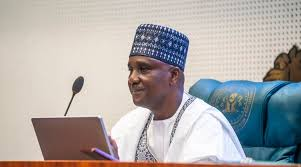
Ahead of the 2027 General Election, the House of Representatives did not support the idea of having a real-time transmission of election results because it will lead to disenfranchisement of a good number of Nigerians while it will also somewhat promote voter apathy, Speaker Tajudeen Abbas, has submitted.
Commenting on the Electoral Act 2022 (Repeal and Re-enactment) Amendment Bill, 2026 , he noted that having a hybrid system of electronic and manual transmission of election results will help to protect disadvantaged Nigerians citing limited phone network coverage and poor power supply.
Team@orientactualmags.com learned that Speaker Abbass, who said this while receiving the Ambassador of Spain to Nigeria, Ambassador Felix Costales in his office at the National Assembly complex, Abuja, also assured Nigerians that the upcoming 2027 general election will be more credible and inclusive.
The Speaker’s Special Adviser on Media and Publicity, Musa Krishi noted in a statement he issued in Abuja on Sunday that Chairman, House Committee on Appropriations, Hon Abubakar Bichi; Chairman, House Committee on Foreign Affairs, Hon Wole Oke; and Chairman, Nigeria-China Parliamentary Friendship Group, Hon Jafaru Yakubu joined Abass in receiving Ambassador Felix Costales.
‘Sometimes, people scream far beyond the exact level of the issue. A lot of people think that we need to embrace electronic transmission in real-time in Nigeria, but within the very little period that you’ve been in Nigeria, you should be able to speak on the quality of our internet network. You should know that even in advanced cities like Abuja, you are not guaranteed stable internet services all the time.
Based on the NCC report, they said Nigeria is still underserved by almost 40 per cent, which means 40 per cent of territories at large in Nigeria are not covered by the internet. Now, tell me, for those who are saying we should go ahead and do that, already, if you look at the number of our registered voters in this country, it is alarming.
It is sad to say that even with the manual arrangement we are using, we are only able to capture about 12-15 per cent of registered voters who, after every four years, come to vote. That’s voter apathy. Very few people go out to vote.
Now, if we are to introduce only the electronic system, it will further reduce the number because 40 per cent of the country will probably not be able to vote as they don’t have adequate internet services. It means what we should be expecting is not only disenfranchising the voters—denying some people the right to vote—we will also record, perhaps, the lowest number of voters in the forthcoming general election.
These are all avoidable. That is why we said, in our wisdom, the Electoral Act should be hybrid—a combination of both the manual and electronic systems. Where it is feasible to use the electronic transmission, use the electronic transmission; where it is not possible, use the manual, because there is no way one form, particularly the electronic, can be used entirely in all parts of the country for the elections’ he said.
Speaker Tajudeen Abass also noted that those who are criticizing the federal lawmakers for opting for a hybrid system of electronic and manual transmission of election results are deceitful politicians.
‘The opposition, even though they know the truth—are Nigerians, they live in Nigeria, they travel all over Nigeria—they know that the level of internet penetration in Nigeria is inadequate. There is no way you will be able to have transparent elections using an inadequate system, and through our energy crisis in the country as well, we do not have stable electricity supply.
The internet is always backed by energy. How do you power the entire country on the day of the election to have phones that are working and internet that is working, backed by adequate electricity? All those are challenges that, for now, will not be able to provide us the opportunity to do transmission in real time online.
In our entire democracy, we will continue to improve year after year, election after election. I believe Nigeria, with the support of countries like Spain, will do better.
We expect you to continue to guide us and give us all the technical advice and support to do better, particularly in the National Assembly, through collaboration between your country and our parliament. It will go a long way in strengthening our competence, particularly in areas of legislative drafting and so on. I believe that with what you have in Spain, Nigeria can benefit a lot. You cannot say you have everything that you require. You keep on learning. We believe that Nigeria is not doing badly, even though it may not be at the rate that the international community would want to see, but we are moving slowly and gradually’ he added.
Giving his speech, Ambassador Felix Costales said he visited the Speaker to strengthen legislative diplomacy and bilateral ties between Spain and Nigeria.
‘You can count on us—whatever we can do to deepen Nigerian democracy. Yes, there may be challenges, but you can count on us in any way possible.
Sometimes when you dig down, you realize that the issues are not that big, or not as big as they seem in the public discourse. It happens a lot in Spain… At the end of the day, if you want to move forward in democracy, you have to reach some level of compromise. We have to try to rule and govern on the level of consensus’ he said-Team@orientactualmags.com Do you have any information you wish to share with us? Do you want us to cover your event or programme? Kindly send SMS to 08035023079, 08059100286, 09094171980 or get in touch via orientactualmag@gmail.com. Thank you