The Salary Propaganda Is Back, and So Are the Falsehoods About Kwara’s IGR Transformation-Abdulyekeen, Mohd Bashir
In the months leading to the 2019 general election, the issue of salary payment became one of the major propaganda tools deployed by the then opposition All Progressives Congress (APC) against the Peoples Democratic Party (PDP)-led Governor Abdulfatah Ahmed administration. The APC knew the circumstances surrounding the salary situation. It knew the challenge was not peculiar to Kwara State. Yet, it maliciously presented the situation as though the Ahmed administration had deliberately chosen not to pay workers and retirees their entitlements, conveniently ignoring the broader economic realities confronting virtually every state in Nigeria at that material time.
Between 2014 and 2019, the sharp decline in federal allocations, which was caused by the sustained fall in global oil prices, severely weakened the capacity of state governments and local councils across the country to meet their financial obligations. This was a direct consequence of decades of Nigeria’s overreliance on oil revenues. At the height of the crisis, about 30 of the 36 states were struggling to pay workers’ salaries. Across the country, states accumulated salary and pension arrears, while infrastructure projects suffered because governments simply lacked the resources to fund them. In fact, some governments considered laying off workers, an action labour unions kicked against.
The situation became so dire that the Muhammadu Buhari-led federal administration had to, on different occasions, magnanimously offer bailout packages to states. More than 25 states benefited from these interventions, which were used largely to offset accumulated salary arrears and other financial obligations.
That was the difficult reality of that era. In fact, Kwara’s situation compared favourably with that of many other states. While several states struggled to pay both state and local government workers, the Kwara State government continued to meet its salary obligations to workers in the core civil service. Local government workers in the State received salaries based on the allocations that came to the councils every month, with the state government sometimes stepping in to augment their allocations to enable them to pay a higher percentage. This was what the APC mockingly christened ‘geri-gedi’ salary.
To put this in perspective: the 16 local governments in Kwara, which used to receive more than N3 billion in combined federal allocations, were getting less than N2 billion during this period. In fact, there were months they received around N800m to N1.2 billion. Unfortunately, what was required to pay salaries of LG workers, including SUBEB staff and pensioners, was about N2.1 billion. The state government itself, which usually received between N3 billion and N4 billion, was getting between N1.5 billion and N2 billion, even though its monthly wage bill stood at about N2.4 billion. If Abdulrahman or any other APC politician was the governor of the state at that material time, the only way they could have met 100 per cent salary obligations was through borrowings.
The opposition APC was not unaware of these facts and figures. Nevertheless, it weaponised the salary situation as a campaign issue in 2019, creating the impression that the PDP-led government deliberately withheld workers’ salaries. The party and its supporters even peddled the falsehood that Senator Bukola Saraki usually returned to Kwara every month to take as much as N2 billion from the state’s federal allocations. The propaganda worked so well for the party. However, one would have expected the APC to have moved on from this narrative after taking over the government in 2019. Yet, more than seven years later, its leaders and supporters are still recycling the same old narrative, despite knowing the facts and the circumstances that shaped the situation at the time.
It is disingenuous to compare the current Governor Abdulrahman administration with that of Dr Abdulfatah Ahmed based on salary payment without putting both periods in their proper economic context. The most pertinent and honest question to ask today is this: with significantly improved federal allocations to states, does Governor Abdulrahman, or indeed any governor, have any excuse not to pay salaries and pensions as and when due? In fact, there are some state governments that pay above the national minimum wage and have also introduced additional incentives for their workers, including 13th-month salaries. Is Kwara doing the same? Neighbouring states like Oyo and Osun pay their workers more than what their colleagues in Kwara receive. These, rather than a simplistic comparison with the past, should be the appropriate benchmark for the present administration in Kwara.
Over the past few days, supporters of Governor Abdulrahman have been amplifying a BusinessDay report that declared Kwara as one of only two states among the 19 northern states capable of paying workers’ salaries without waiting for monthly allocations from Abuja, attributing this largely to the state’s improved Internally Generated Revenue (IGR). There is nothing wrong with celebrating an improvement in Kwara’s revenue generation. What is wrong, however, is attempting to rewrite history by suggesting that the state’s revenue transformation began with Governor Abdulrahman in 2019. It did not. The foundation for this achievement was laid by the previous PDP administration under Alhaji Abdulfatah Ahmed, and the records tell a story that cannot simply be wished away for political convenience.
This brings me to a recent article written by one Dr Sheriff Ibrahim, in which he praised Governor Abdulrahman for this IGR feat while making several exaggerated, misleading, and false claims that deserve corrections.
Ibrahim claimed that Governor Abdulrahman inherited a state burdened by serious debt when he assumed office in 2019. This is false. As of May 2019, when Abdulrahman was sworn in, Kwara’s debt profile stood at N61.3 billion. What Ibrahim conveniently left out is that, in less than four years, the Abdulrahman administration borrowed N48 billion, pushing the state’s debt to N109 billion, an increase of nearly 80 per cent in just three years. Regrettably, there is little to show for that N48 billion in borrowed funds.
The same problem of historical revisionism is evident in Ibrahim’s claim that Governor Abdulrahman met a weak internal revenue base and that Kwara’s IGR only began to grow after he assumed office in 2019. The impression he attempted to create with this false claim is that there was no meaningful improvement in the state’s IGR until Abdulrahman took office and that his administration has achieved something unprecedented or extraordinary. This claim is simply untrue, as it is not supported by figures.
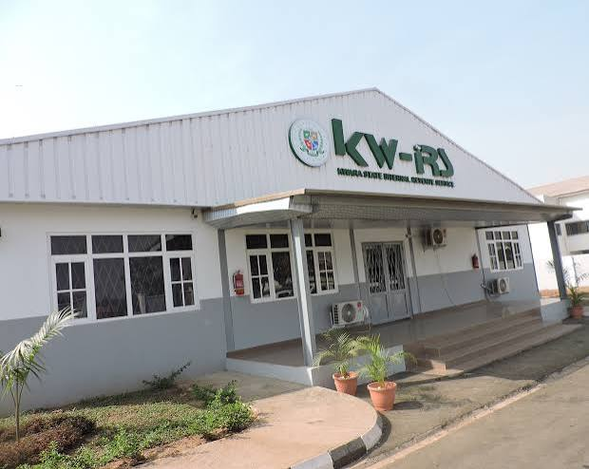
For the avoidance of doubt, Kwara’s IGR stood at approximately N7.2 billion in 2015. Following Alhaji Abdulfatah Ahmed’s restructuring of the state’s revenue collection and management system, which led to the establishment of the Kwara State Internal Revenue Service (KWIRS) headed by Prof. Muritala Awodun, the state’s IGR grew from N7.2 billion in 2015 to N17.4 billion in 2016, an increase of more than 100 percent. This was at a time when the nation’s economy was experiencing a downturn. The impact of this reform was not merely reflected in revenue figures. It also improved Kwara’s fiscal standing.
That positive turnaround propelled Kwara from 20th position in 2015 to 10th position in 2016 on BudgIT’s fiscal sustainability index, ranking the state among the ten most fiscally sustainable states in the country at the time. The fiscal sustainability index, an initiative of budget-monitoring and civic advocacy organisation, BudgIT, is compiled annually based on a review of states’ monthly federal allocations, debt burdens, budget-funding capacity, and IGR.
And the revenue growth continued as Kwara’s IGR rose to N19.7 billion in 2017 and N23.1 billion in 2018. In 2019, a transition year spanning the outgoing Ahmed administration and the incoming Abdulrahman government, the state’s IGR reached N30.6 billion. Given these figures, is it not duplicitous, misleading, and frankly preposterous for anyone, let alone someone who holds a PhD in Finance and describes himself as a researcher, to claim that Kwara had a weak revenue system before Governor Abdulrahman and that the state’s IGR only began rising once he assumed office? The record simply does not support that line of argument.
Facts are stubborn things. Whatever improvements Kwara has recorded in its revenue mobilisation architecture in recent years, they did not emerge from a vacuum. They were built on the institutional and structural reforms initiated by the previous PDP administration. This is the truth that Governor Abdulrahman and his supporters consistently fail to acknowledge. Get it right. This is not an attempt to deny the present administration whatever credit it deserves for sustaining or improving the system. Rather, it is a demand for historical honesty.
It is also worth noting that, as Kwara’s revenue profile improved under Alhaji Abdulfatah Ahmed, he sought to create a mechanism through which the state could finance critical infrastructure without depending entirely on federal allocations that were dwindling at the time. This led to the introduction of the Kwara Infrastructure Development Fund (IF-K) in September 2016. IF-K was designed as a sustainable platform for funding infrastructure from internally generated resources. The initiative commenced with a N5 billion seed fund, while N500 million was drawn from the state’s IGR purse every month to feed the IF-K to finance development projects.
This was at a time when states across Nigeria were battling severe fiscal pressures, dwindling federal allocations, rising budget deficits, and difficulties meeting their obligations to workers, pensioners and contractors. Through improved IGR and the IF-K, the Kwara state government completed several ongoing projects and initiated new ones in different parts of the State. The IF-K financed projects like the Geri-Alimi Diamond Underpass, dualisation of Kulende-UITH road, KWASU Postgraduate School, Ilorin, Ultramodern Secretariat for civil servants, Share-Oke Ode road, Oloro Palace road, among others across the state.
The restructuring of Kwara’s revenue collection system through KWIRS and the establishment of IF-K were among the notable governance innovations of the PDP administration that cannot be erased by historical distortions and jaundiced commentaries. The significance of these initiatives should not be lost in today’s political debate.
If today’s Kwara can generate enough internally to meet its monthly salary obligations without waiting for Abuja, that is a welcome development. But it is intellectually dishonest to pretend that Kwara’s revenue reformation began in 2019 with Governor Abdulrahman. It did not. The facts show that Kwara’s revenue mobilisation had already undergone a significant transformation before 2019. The state had increased its IGR substantially, improved its fiscal sustainability ranking, and established a mechanism for using internally generated revenue to finance infrastructure.
Governor Abdulrahman and his supporters are entitled to celebrate the accomplishments of the present administration. What they should not do is erase the contributions of previous administrations or try to rewrite history for political convenience.
Abdulyekeen, Mohd Bashir, a political pundit, writes from Ilorin, Kwara State