Oloriegbe: Yesterday Is Now Speaking For Today- Bolaji Aladie
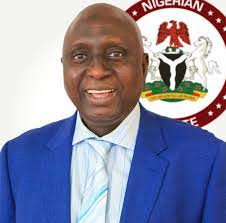
In moments of political transition, societies are often confronted with a critical choice: whether to be persuaded by projections of what could be, or to be guided by evidence of what has already been done. The distinction is not trivial. It is the difference between speculation and certainty, between promise and proof.
In the evolving political landscape of Kwara State, the trajectory of the immediate past Kwara Central Senator and one of the leading aspirants seeking to succeed Mallam Abdulrahman Abdulrazaq as governor of Kwara State from 2027 onwards, Dr Ibrahim Yahaya Oloriegbe presents a compelling case where yesterday is not merely history but rather a living testimony that shapes the credibility of today.
Long before public office and political prominence, Oloriegbe’s journey was defined by professional discipline and service in the medical field. As a practicing physician, his contributions to healthcare development extended beyond routine clinical engagement into systemic improvement, both within Nigeria and internationally. This early phase of his career is critical to understanding the foundation of his leadership style—one rooted in diagnosis, structure, and sustainable solutions.
His involvement in health sector reform dates back to 2001, when he emerged as one of the pioneering Change Agents under the Change Agent Programme (CAP), a strategic reform initiative supported by the British Department for International Development (DFID). Under Professor Eyitayo Lambo’s leadership , the programme was designed to strengthen Nigeria’s health system through policy innovation and institutional restructuring. Oloriegbe’s role in that initiative was not peripheral; it was central enough that he was later entrusted with its leadership as Director after Lambo was appointed as Minister of Health. This progression reflects a pattern that has become characteristic of his career—responsibility earned through performance.
That same trajectory continued with his emergence as the pioneer Executive Secretary of the Health Reform Foundation of Nigeria, where he played a defining role in advancing national conversations on health policy, financing, and governance. At HERFON, he was part of the core team that contributed to the drafting of Nigeria’s National Health Policy. This foundational document not only shaped sectoral direction but also laid the groundwork for the first National Health Bill in 2004. This was not just administrative work; it was nation-building at the policy level.
His expertise was not confined to national borders. In 2015, after his withdrawal from the Senate race, he was appointed as Chief of Party by Plan Liberia for the Global Fund Country Malaria Programme, a role that placed him at the forefront of international public health intervention. His work focused on combating malaria among pregnant women and children—one of the most vulnerable demographics—demonstrating both technical competence and humanitarian commitment. Such assignments are not casually given; they are reserved for individuals with proven capacity to manage complex, multi-stakeholder programmes in challenging environments.
Even within the political space, this pattern of relevance has remained consistent. Following the 2022 primary elections, rather than retreat from service, Oloriegbe was immediately called upon to serve at the national level as a member of a 12-man Health Sector Reform Committee under the then Vice President Yemi Osinbajo’s leadership. This appointment is instructive. It underscores a critical point: his value transcends electoral outcomes. Even outside elective office, his expertise remains in demand at the highest levels of governance.
Beyond policy and politics, his service record also extends into religious and national assignments. Having served on multiple occasions as a member of the Federal Medical Team to Hajj, coupled with his almost annual participation in the pilgrimage, Oloriegbe developed a practical understanding of the logistical, medical, and administrative complexities of the exercise. This background proved invaluable when he was appointed as Amirul-Hajj for Kwara State in 2024. Under his leadership, the pilgrimage was widely regarded as one of the most coordinated and seamless in the state’s history, reflecting his capacity to translate experience into effective execution even in high-pressure, large-scale operations.
This continuity between past contributions and present relevance is further exemplified in his legislative career. His sponsorship of the National Health Insurance Authority Act 2022 was not an isolated achievement; it was the culmination of decades of engagement with health systems reform. Today, as Chairman of the Governing Council of the National Health Insurance Authority, he occupies a position that aligns directly with his legislative and policy contributions. This is not a coincidence, it is the logical extension of a career built on substance.
What emerges from this pattern is a leadership profile defined by preparedness rather than opportunism. From clinical practice to policy reform, from legislative impact to international development work, and even to complex national assignments like Hajj operations, Oloriegbe’s journey reflects a deliberate accumulation of experience across interconnected domains. Each role has not only added to his credentials but has also deepened his understanding of governance as a system of interdependent structures requiring competence, coordination, and continuity.
As Kwara looks toward the future, particularly in a period that demands consolidation of gains and acceleration of development, the relevance of such a trajectory becomes even more pronounced. Governance at the executive level is not an experimental exercise; it requires individuals who understand both the theory and practice of leadership, who have navigated complex systems, and who have demonstrated the capacity to deliver results under varying conditions.
In this context, Oloriegbe’s past does not only inform his present but also validates it. His story is one where yesterday consistently prepares the ground for today, where every prior engagement adds a layer of credibility to current aspirations. It is a narrative of continuity, competence, and consequence.
Ultimately, the future of any society is best entrusted to those whose past has already proven their readiness to shape it. And in the unfolding conversation about the next phase of leadership in Kwara State, the voice of yesterday—clear, consistent, and evidence-based—continues to speak with authority through the life and work of Senator (Dr.) Ibrahim Yahaya Oloriegbe.
It is time for Kwara State to make an informed choice beyond momentary gains and parochial sentiments-Mr Bolaji Aladie, a political pundit, writes from Ilorin, Kwara State